Teaching what I've learned from the hood, the ring, and everything in between. Join 35k other readers to learn how to manage risk, build relationships, and confront reality.
A Short Lesson on Internet Ad Revenue (and Why You Lose Every Time You Share That Outrageous Post)
|
The Internet is an attention-based economy. People don’t even have to sell products to make money—just look at the income model called “CPM.” CPM means “cost per thousand” (M for “mil” or thousand from Roman numerals). If a website charges $2.00 CPM, every 1,000 page views net them two bucks. I want to be very clear: you never have to buy anything. You don’t even need to read the ad. The mere fact it pops up on your screen counts as an impression. And this isn’t small potatoes—last year, the Interactive Advertising Bureau clocked U.S. digital ad revenue at $209 billion, mostly from CPM-style ads (IAB, 2023). Your eyeballs are the jackpot, not your wallet. It’s like a casino: In 2023, U.S. casinos pulled in $53 billion with just a small edge over players (Statista, “U.S. Gaming Industry Revenue,” 2023). They don’t sweat your wins—keep spinning, and they bank on your attention, just like news sites bank on your clicks. News sites know this game. They don’t need you to read the article—just load it, and they log an impression. That’s why headlines have gotten sensationalist to the point of being wrong. Facts are boring. Exaggeration of those facts? Not so dull. It’s not just you—our brains are wired for negativity bias. Psychologist Roy Baumeister found bad news sticks five times harder than good. That’s why “Local Hero Saves Stranded Family in Blizzard” barely ripples, but “President Trump’s DOGE Firings Spark Chaos and Lawsuits” went viral in February 2025, racking up millions of shares on X—or “Tech CEO Caught Faking AI Breakthrough” dominated January 2025 headlines, while “Nonprofit Raises $10M for Clean Water” got buried. Bad news hooks us; good news gets ignored. Maybe you’ll read the article and see it contradicts the headline, but it doesn’t matter—they still got paid. You might wonder, “How does this keep going if no one buys?” Even if you don’t click the ad, it’s planted in your awareness. News sites have reliable traffic. You might ignore that ad today, but with data models, it’s highly likely you’ll buy later. And they’ve got the tech to nail it. Statista says over 90% of online ads use algorithms—think lookalike audiences matching you to similar shoppers, or pixels tracking your every browse (Statista, “Programmatic Advertising Spending,” 2023). Robert G. Reeve’s 2021 X thread nailed it: no eavesdropping needed—just your location and habits stitched together. That ad’s a trap, keeping you hooked on the next outrageous headline. The people who write these headlines aren’t stupid—they know engagement is king, especially on social media. A right-wing political take gets cheered by the right, attacked by the left, and suddenly it’s everywhere. Confirmation bias kicks in, too—cheer your side, dunk on the other, and each share is a dopamine hit the algorithm loves. A 2018 MIT study found false news—especially political—spreads 70% faster than truth, hitting 1,500 people six times quicker, all because it sparks surprise or disgust (Vosoughi et al., Science, 2018). A 2021 NYU study doubles down—anger or fear makes posts 20% more viral (NYU Stern Center for Business and Human Rights, 2021). It’s not just politics; it’s human nature wired into the algorithm, exponentially fueling shares—and ad bucks. When you’re in a war, the best side to be on is the one who sells the weapons. Each time you share something online, you add a new connection to its network. That’s where Metcalfe’s Law comes in—it says a network's value grows roughly with its users' square (N^2). So, if a post starts with 10 people and you share it, reaching 20, then 40, then 80, its reach explodes exponentially. One share can spark chaos, doubling the audience again and again. If you really disagree with a post, don’t feed it—ignore it. Starve it of attention so the fire burns out. You might think, ‘I have to call this out.’ Fair, but every click’s a paycheck for the troll. Starving them hurts more than shouting.” Even if most people did this, I don’t think it’d slow the tide of biased, sensationalist content much. But it will make you happier and more productive. One of the greatest sources of stress is worrying about things you can’t control. Time is zero-sum—every minute spent arguing online is 60 seconds you lose learning, loving, and creating. That stress you feel? It’s not just wasted time—it’s subsidizing the next divisive headline. Break the cycle, save your sanity, and maybe put a dent in corrupt, fear-mongering media. The Streisand Effect
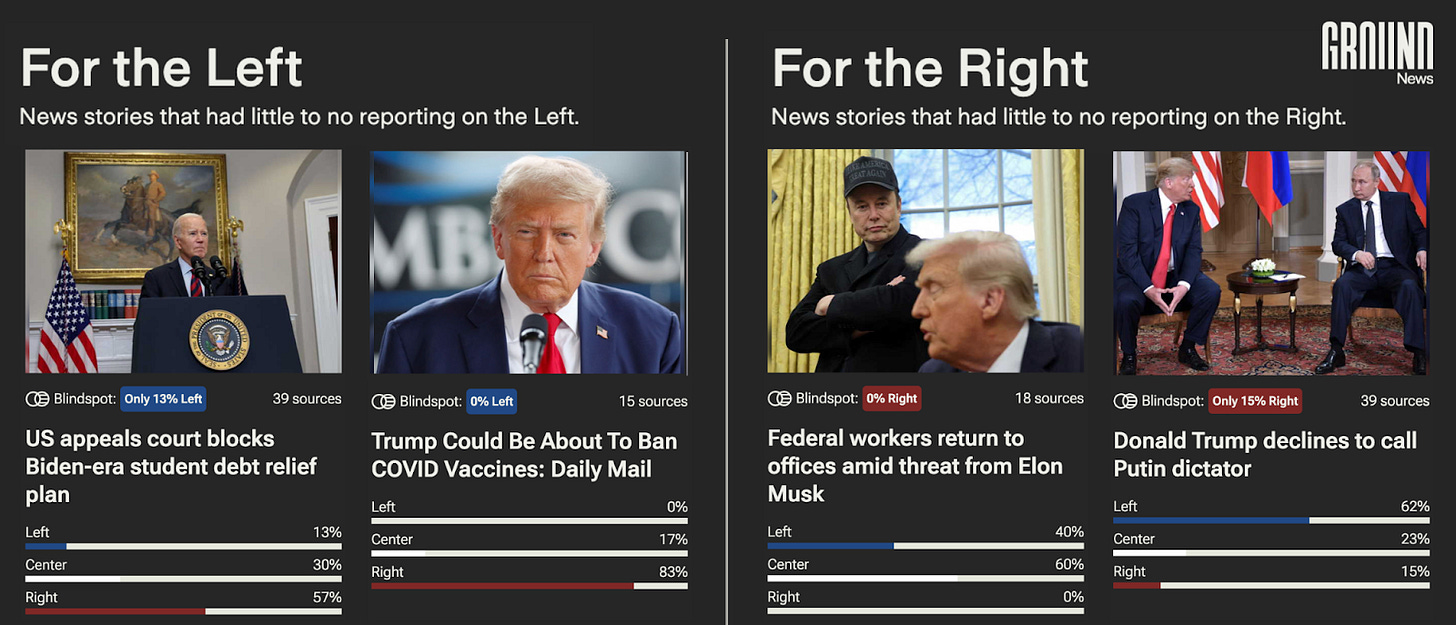
I’ll end with a 2016 story from the Trump/Hillary Clinton election in Pittsburgh. Tons of anti-Trump, pro-Clinton protesters made a scene when Trump visited. The media ate it up, especially since they hyped a “massive protest.” But here’s why it stuck: the availability heuristic—a mental shortcut where we judge things by what’s easiest to recall, like that screaming protester on TV. It made their chaos feel like the whole story, even if it was just a loud minority. Ignoring it starves the cycle; amplifying it feeds the beast. Imagine if they’d rallied Clinton supporters to hear Chelsea Clinton speak on the other side of town that day. Instead, their noise backfired—a classic Streisand Effect.” What’s that? The Streisand Effect is when fighting or hiding something—like protesters opposing Trump—backfires, boosting its visibility. It’s named after Barbra Streisand, who in 2003 tried to suppress a photo of her Malibu home, only to draw millions of eyes to it. The protesters looked crazy, making Trump seem like a sane alternative to Clinton’s supporters. It worked—Pennsylvania voted for Trump by 0.72%. If only they’d ignored him and focused on their own candidate. And it’s not just 2016—this keeps happening. History proves it’s no fluke. Take Gamergate in 2014—a niche video game spat that exploded into a culture war as everyone shared the fight. News sites and advertisers laughed to the bank while the issue got buried. Fast forward to 2020: COVID misinformation—anti-mask, anti-vax claims—went viral when debunkers shared them. MIT found in 2021, those “corrections” boosted their spread by 30% (Zhou et al., PloS ONE, 2021)—no surprise since their 2018 study showed false news already spreads 70% faster (Vosoughi et al., 2018). And for clarity, this isn’t about my stance on vaccines—it proves your rage only benefits a few, not you. Say what you will about Twitter/X, but Elon Musk’s 2022 takeover is another example. Haters shared his tweets to mock him, only to see X analytics show his impressions tripled. Engagement is a double-edged sword, cutting deeper into your sanity while padding someone’s profits. This phenomenon is one of the reasons I chose to use today’s sponsor, Ground News, to stay informed. Ground News is a website and app that cuts through the outrage fueling today’s attention economy. While social media thrives on clicks—pushing sensational headlines like ‘President Trump’s DOGE Firings Spark Chaos’ to millions on X—Ground News flips the script. They aggregate news from across the spectrum, showing how left, right, and center outlets spin the same story. By exposing the outrage bait behind the headlines, Ground News hands you the tools to skip the trap, think clearer, and starve the beast instead of feeding it. With their Blindspot Feed, you can also see stories that are being ignored by one side of the political spectrum - like this story about Trump potentially banning COVID-19 vaccines, which was underreported by the left.
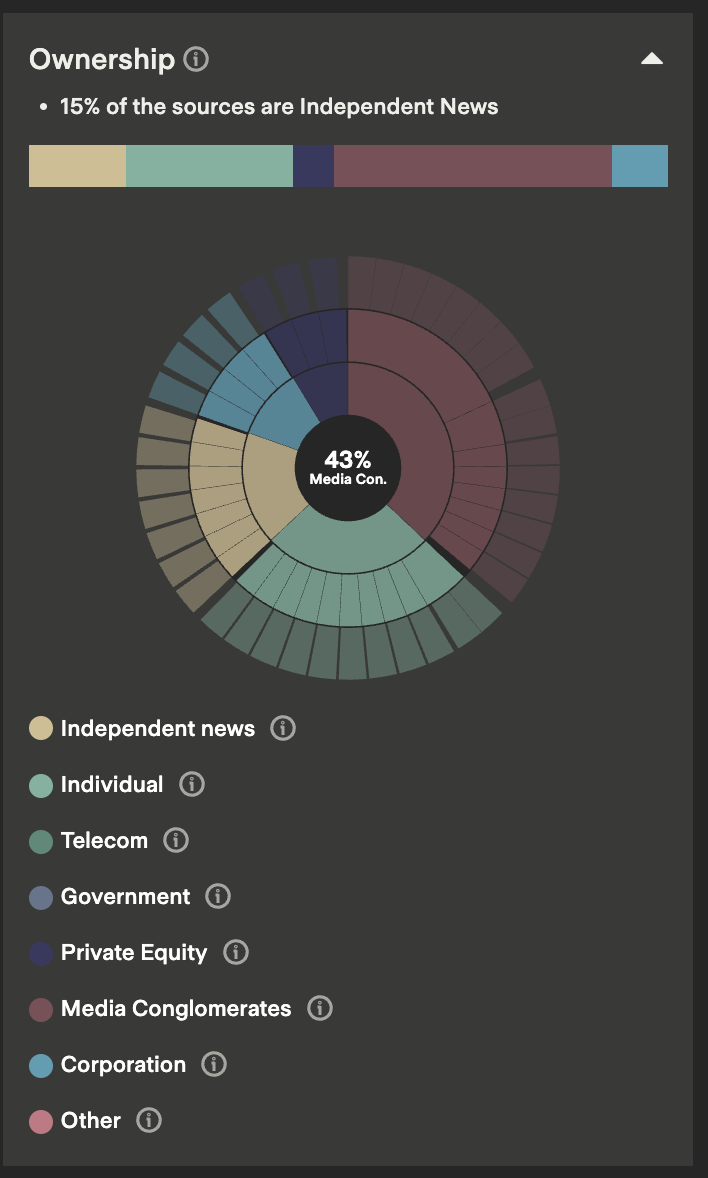
Ground News is user-funded, so you never have to worry about the news being biased toward the political lean of the owner. This is a well-documented problem in the media, and Ground News combats it by revealing the owners of each publication.
Sign up to Ground News by using the link in this essay for 40% off their already affordable Vantage Plan, the same one that I use, and stop letting the media profit from your outrage. Most won’t get it, use it, or think I’m nuts—but social media and advertisers know you can’t resist, and they’re raking it in. It was confirmed in 2021 that Facebook gave “anger” posts a 5x boost over “likes” (The Washington Post, 2021). Media thrives on division because it drives engagement—and $209 billion in 2023 ad bucks. Platforms rig the game to hook you, but every click still funds someone’s mansion, Lambo, and vacation. Are you okay with that? I hope not. Starve the beast—skip the share, close the tab, and hit back where it counts: their profits. |

Stoic Street Smarts
Teaching what I've learned from the hood, the ring, and everything in between. Join 35k other readers to learn how to manage risk, build relationships, and confront reality.
“Do unto others as you would have them do unto you.” That’s the Golden Rule for navigating how you treat others, and you could do far worse than living your life by this code—at least in theory. The reality is that people have always gotten out of pocket and tried to bully, intimidate, discriminate, or dominate others for various selfish reasons, regardless of how you treat them. That’s how it is, how it always was, and how—as long as humans exist in a world of finite resources—it always will...
The Great Hood Sage Lil’ Jon once famously said: “Don’t start no shit, won’t be no shit.” I learned this growing up in the projects, but if you don’t speak hood, I’ll translate: If you don’t provoke people or cause problems, your interactions with them will be free of provocation and problems. The idea seems simple enough, but rarely does it ever go as planned, because some ornery humans will always—in their pursuit of more—end up in conflict with those whom they think are victims to take...
Life isn’t easy. Most of the time, it’s not even fun. Most of life is hard, but that doesn’t mean something is wrong. On the contrary, it’s part of what makes life so beautiful. Making it through those challenging moments—when it feels like the whole world is against us and we can’t catch a break—is the only sustainable path to joy. And we chase that joy like a fiend after a fix because it gives our lives meaning. Imagine, for a moment, a world without hardship, where it was just all fun and...